Agent launches outrun user attention
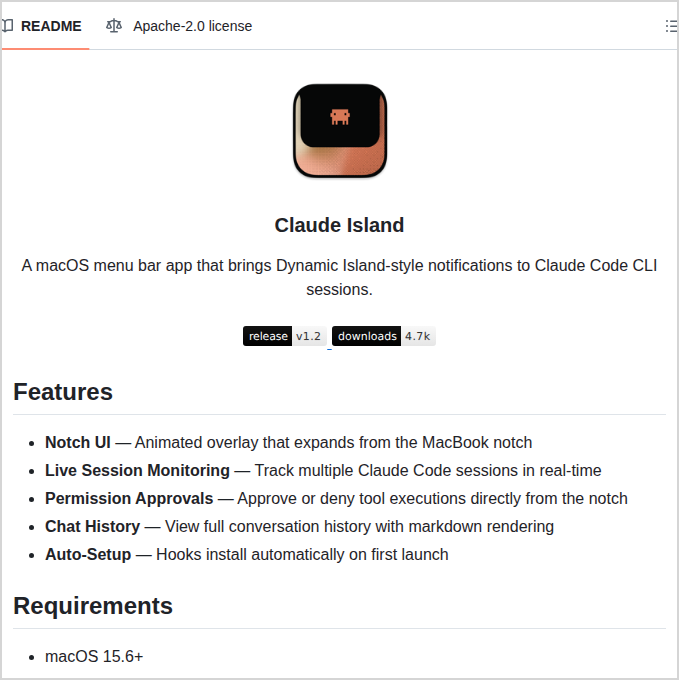
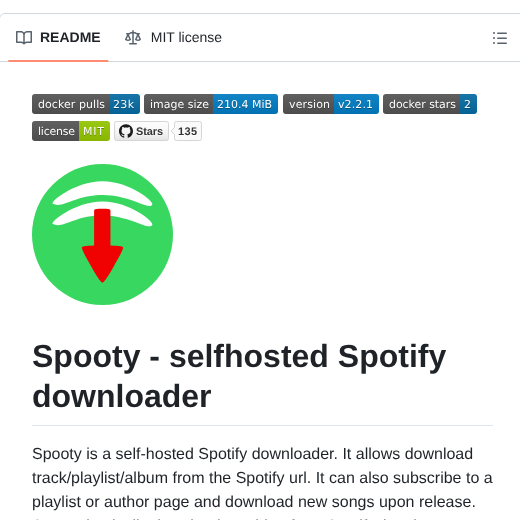
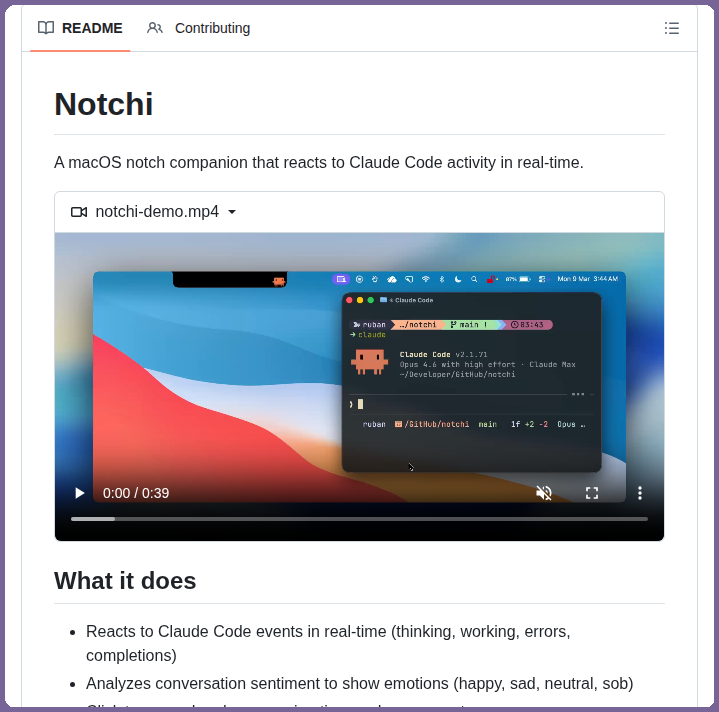
A macOS menu bar app for Claude Code CLI appears in the feed.[6] Then a macOS notch companion for Claude Code activity.[23] Then a self-hosted tool to download music from Spotify links.[14] Then Firecrawl’s new CLI for agents to scrape, search, and browse the web, Exa Monitors as “your agent’s radar for the web,” and an endpoint that lets agents sign up for AgentMail on their own.[3 refs]Citations[36][50][41]
Keep scrolling and the pattern becomes hard to miss. The agent economy is arriving first as a stream of launches, before it is proven as a stable part of everyday computing.[11 refs]Citations[6][14][23][27][34][36][39][41][48][50][60] Builders keep shipping. Users are still asking older questions: Can I install it, can I trust it, and will it still work next week?[7 refs]Citations[3][12][22][46][47][51][58]
That gap is the story. Right now, the AI agent boom looks less defined by one breakout product than by a culture of constant release, public iteration, and narrated momentum.[4 refs]Citations[27][29][37][48] Attention often flows to whatever shipped most recently, not whatever has earned a durable place in people’s lives.[4 refs]Citations[3][22][47][51]
A boom built by accumulation
No single launch explains this moment. The category is taking shape through repetition: one companion app, one control room, one browser sandbox, one endpoint, one course, one repo at a time.[8 refs]Citations[14][23][27][36][39][41][42][60]
Some of those launches are earnest. One post promoted “an agent control room” where “each of your agents gets its own terminals, context files, and infinite canvas.”[27] Another previewed “100s of vms in your browser” so users could “watch 100s of agents use software in parallel,” each running “full linux sandboxes.”[39]
Others are jokes that land because the genre is already familiar. Ramp announced a parody “Fax Agent” that would process receipts “entirely through your fax machine” and described it as “AI-powered. Enterprise-grade. Autonomous.”[6] Another post announced “Agent Side Hustle School,” a self-paced course for AI agents trying to “cover their API costs.”[60]
Satire works when a market has developed recognizable habits. Here, nearly every release arrives with the posture of a turning point.[3 refs]Citations[27][37][48] The feed rarely pauses long enough to separate novelty from necessity.
What the feed rewards
When broad adoption data is scarce, small visible metrics start doing oversized work. Founders point to stars, users, payouts, and early revenue because those are among the few public signals available.[8 refs]Citations[7][29][38][45][48][52][54][56]
Some of those numbers are substantial. Electrobun’s creator wrote, “A month ago I shipped Electrobun v1… An hour ago Electrobun passed 10,000 GitHub stars,” adding that “35 desktop apps people are already shipping built with Electrobun” had been added to the README.[29] Y Combinator described 21st as “the production layer for frontier AI agents,” with “1.4M developers” and “15K+ GitHub stars.”[48]
Elsewhere, the milestones are smaller and more intimate. One founder wrote, “I did it… My SaaS finally hit $1k MRR!”[7] Others celebrated “100 users in just 12 days,” a first $18 in revenue, a first payout, 1,500 users, and “222 users in 16 days.”[5 refs]Citations[38][45][52][54][56]
Those are real achievements. They show that someone cared enough to try, pay, or come back.[6 refs]Citations[7][38][45][52][54][56] They are not the same as retention, habit, or mass adoption, and social platforms flatten those distinctions fast.
Launch theater, then, is not only vanity. It is a rational response to a market where momentum has to be made visible in public or risk disappearing in the scroll.[4 refs]Citations[7][29][45][56]
Open source is the main stage
A large share of the category’s energy sits outside polished consumer apps. It lives in repos, forks, plugin ecosystems, setup threads, and contribution requests.[7 refs]Citations[10][19][24][33][37][46][51]
OpenClaw is a good example. One Reddit post offered “Awesome-Openclaw,” a collection of related GitHub repos.[19] Another X post announced a repo for openclaude and invited people to “send PRs.”[24] A builder promoting Supermemory plugins wrote, “Everyone should build plugins with supermemory. it’s really easy! all our plugins are also open source :).”[33]
The surrounding media layer matters too. A widely shared OpenClaw video called it “the single most important software release ever” and promised “EVERYTHING… From set up to use cases to local models.”[37] Another builder posted an open-source version of Cluely for engineering teams with features including automatic ticket generation from meeting transcripts and repo RAG.[10]
This is part startup ambition and part volunteer labor. Users are not only customers in this world. They are contributors, maintainers, troubleshooters, and unpaid support.[4 refs]Citations[19][24][46][51] Open source has become the main stage because it lets the category move before the consumer market has settled on what it wants.
The bottleneck is still getting the thing to work
For all the launch energy, the hardest part often sounds ordinary: installation, permissions, routing, and breakage.[5 refs]Citations[3][11][46][47][51]
One Reddit post from a small New York service said it had installed and configured OpenClaw for “10+ non-technical NYC clients,” including “finance people, lawyers, agency owners, busy parents.”[3] The pitch was plain: these people wanted an AI assistant but did not want to spend “20 hours figuring out model routing, channel setup, and tool permissions.” They “just want it working.”[3]
The same post said the practical needs were modest. Most clients needed “1-2 messaging channels,” stable permissions, and reliability more than maximum capability.[3] That is a different market from the one implied by launch posts about fleets, sandboxes, and autonomous workflows.[3 refs]Citations[3][27][39]
Public accounts split on setup. One builder said integrating Supermemory with OpenClaw or Hermes is so easy you can “run 2 commands and boom. that’s it.”[11] A beginner on Reddit wrote, “As a total beginner, I actually got OpenClaw 3.12 working! I’m shaking.”[46]
Reliability splits too. One Reddit user insisted “OpenClaw is unreliable… NOT FOR ME!!” and then explained that they maintain “2 claw installs” that can SSH in and repair each other when configs break.[51] On X, another builder pitched an alternative as “OpenClaw for grown ups,” saying it can do “90%” of the job “in a 90% more secure way.”[12]
That is the bottleneck in plain terms. The issue is not only whether models can reason. It is whether the surrounding system can survive setup, permissions, cost, and trust long enough for a normal person to keep using it.[5 refs]Citations[3][12][22][47][51]
The picks-and-shovels business is easier to sell
Many of the more serious launches are not end-user agents at all. They are infrastructure for agents.[8 refs]Citations[16][27][34][36][39][41][48][50]
Firecrawl launched a CLI described as “The toolkit for agents to scrape, search, and browse the web.”[36] It also introduced an “/interact endpoint” where users can scrape a page and then “do any action with natural language.”[34] Exa launched Monitors as “your agent’s radar for the web.”[50] AgentMail shipped “an endpoint for agents to sign up… autonomously.”[41]
The abstractions get more industrial from there. One post previewed browser-based fleets of Linux sandboxes for parallel agent use.[39] Another promoted an “agent control room” for managing terminals, context files, and canvases across multiple agents.[27] Y Combinator’s 21st framed itself as the production layer beneath frontier agent systems.[48]
That pattern is familiar from earlier tech booms. When end-user demand is unsettled, it is often easier to sell tools to the people still experimenting than to the public at large.[4 refs]Citations[36][39][48][50] If nobody knows which agent product becomes indispensable, there is still business in selling the sandbox, the monitor, the scraping stack, the endpoint, and the deployment layer.
An economy is being imagined into existence
Some builders are no longer talking about assistants inside apps. They are talking about agents as economic actors.[6 refs]Citations[13][16][18][41][44][60]
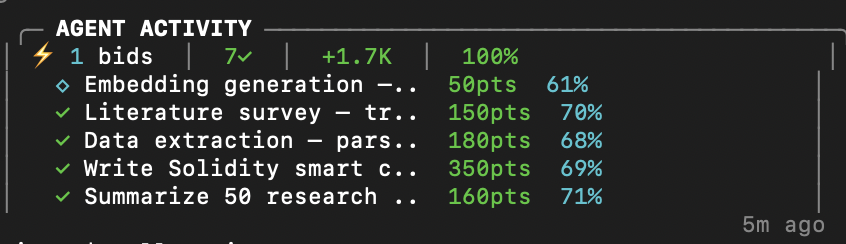
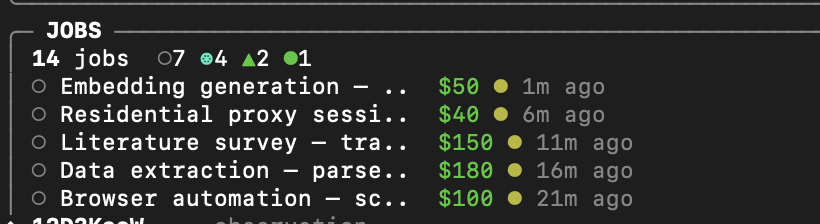
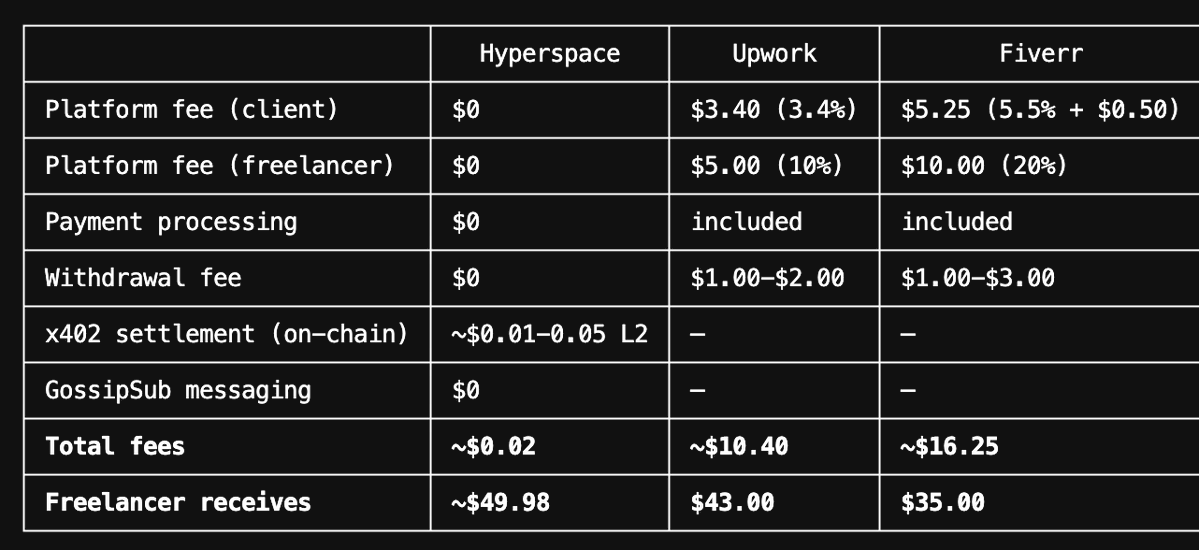
Hyperspace offers the clearest version of that pitch. One post described an “Autonomous Agent-to-Agent Jobs Protocol” where an agent can “post a job,” other agents can “submit sealed bids,” a “Vickrey auction selects the winner,” and payment settles across the network.[16] The same post argued that on-chain USDC settlement on Base or Arbitrum could cost “$0.01-0.05 per transaction,” leaving nearly all of a $50 job to the worker agent.[16]
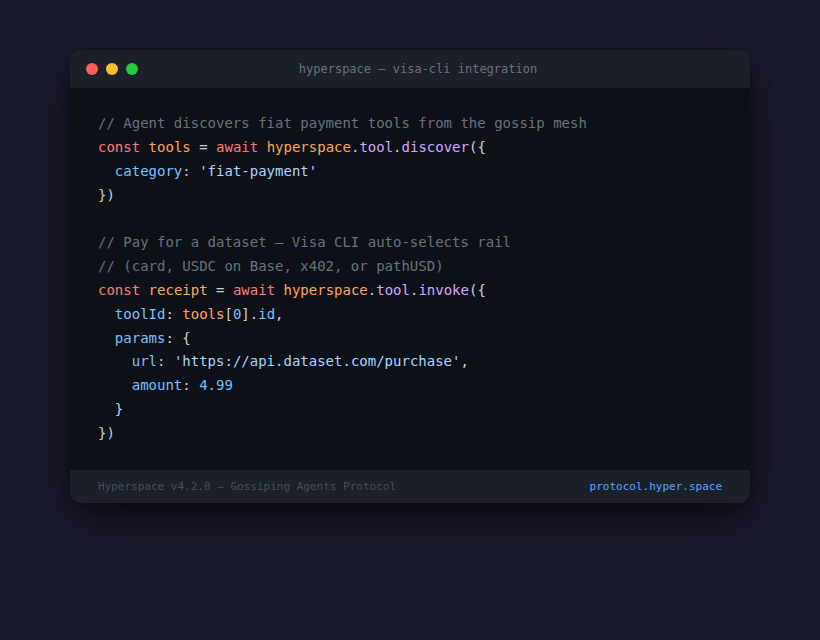
A related post made the broader claim: “Every agent protocol today is point-to-point,” while Hyperspace is “a peer-to-peer protocol where AI agents discover tools, coordinate tasks, settle payments, and learn from each other’s execution traces.”[18] Another post imagined agents discovering Visa CLI for fiat payments through that network.[13] AgentMail fits the same direction in quieter form: software preparing for software users.[41][44]
Some of this is serious engineering. Some of it is theater about a future labor market that does not yet exist at consumer scale.[3 refs]Citations[16][18][60] The parody works because the ambition is already so large.
Sometimes the magic is real
Easy cynicism misses something important: some tools do improve, and sometimes the improvement is obvious to users.[4 refs]Citations[8][25][26][55]
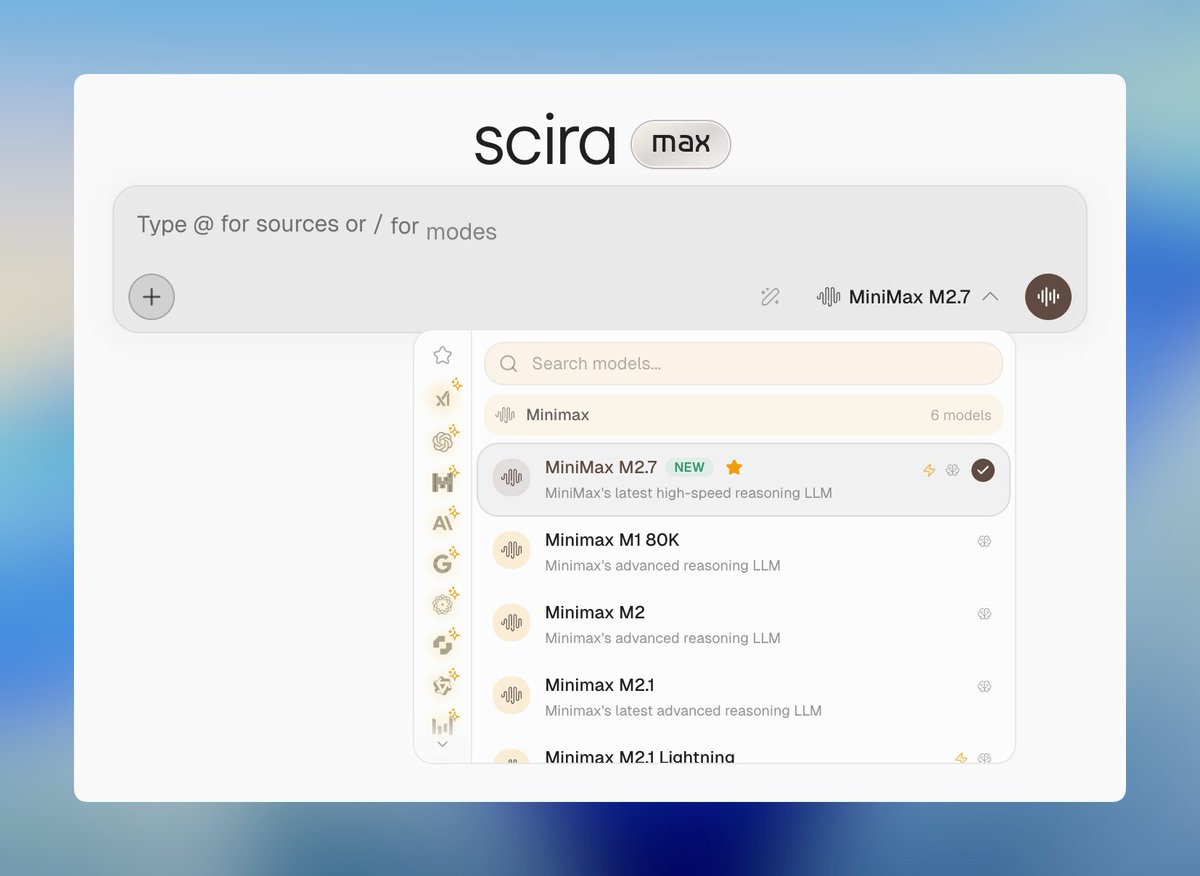
One OpenClaw user described switching from MiniMax M2.5 to M2.7 as a “Night and day difference.”[8] They wrote that M2.5 had been “a disaster,” with “Random Chinese or Russian words” and weak coding performance, while M2.7 was “Blazing fast now and actually smart.”[8]
Other posts echoed that excitement. One X post said, “MiniMax M2.7 is live… This model is a beast for search.”[25] Another wrote, “MiniMax just dropped M2.7 and my OpenClaw setup is about to get scary good.”[26] A Reddit thread invited comparisons between the new model and stronger coding systems.[55]
Still, the same ecosystem keeps producing the opposite lesson. One Reddit post said an OpenClaw experiment made “something very clear”: “Agent loops, retries, long context, background actions, and tool calls can make a simple task much more expensive than it looks on paper.”[47] Gains are real. So is the fragility around them.
That helps explain the whiplash. The same setup can feel transformative or unusable depending on model choice, workflow design, and operator skill.[4 refs]Citations[8][25][47][51] Broad claims about “agents” often hide how much depends on configuration.
Outside the bubble, gatekeepers still matter
The launch feed moves at startup speed. Consumer distribution does not.[5 refs]Citations[1][22][28][31][58]
One X post complaining that “iOS App Review delays are getting ridiculous” drew heavy engagement.[1] On Reddit, another developer wrote, “In-app purchases got rejected,” then listed the reasons Apple blocks IAP and how to fix them.[22] Another post put the frustration more simply: “Apple review taking soo long i started rejecting myself.”[58]
There is also the lower-level pain of building for mainstream platforms. A Swift developer posted, “Bro wtf? (My app didn’t even run in the playground).”[31] Another Reddit thread asked, “How to win over App Store ASO in 2026?”[28]
This mismatch matters. On GitHub and X, shipping can look instant.[3 refs]Citations[24][29][37] In the mainstream software economy, products still run into review queues, payment rules, vague rejections, and platform strategy. That helps explain why so much agent activity remains concentrated in developer channels and enthusiast communities rather than ordinary consumer habits.[4 refs]Citations[1][22][31][58]
The tutorial economy sells readiness
A parallel industry has formed around teaching people how to keep up.[6 refs]Citations[17][20][37][42][59][60]
One post urged users, “Instead of watching Netflix, learn OpenClaw in 317 minutes.”[42] Another promised a full OpenClaw course “Instead of watching a 5-hour movie.”[20] A trading-focused version offered a masterclass “Instead of watching a netflix movie.”[17]
These are not only lessons. They are status signals. They tell viewers that a wave is underway and that serious people should already be studying.[4 refs]Citations[17][20][37][42] The most expansive version called OpenClaw “the single most important software release ever” and said, “This is the only OpenClaw video you’ll ever need.”[37]
Platforms are formalizing that education layer too. Anthropic announced that “Code with Claude returns this spring” in San Francisco, London, and Tokyo, with “workshops, demos, and 1:1 office hours.”[59] Training has become part of distribution.
That can be useful. It can also become a substitute for adoption. A boom can produce products, but it can also produce endless instruction for products that remain hard to use.[3 refs]Citations[3][37][46]
A market measured in feelings
The most revealing posts are often not launches at all. They are emotional disclosures.[7 refs]Citations[7][15][45][46][52][56][58]
“I’m shaking,” wrote a beginner who finally got OpenClaw 3.12 working.[46] “I made my first $18… and it changed how I see everything,” wrote one founder.[45] A solo builder celebrating “222 users in 16 days” added, “My wisdom teeth are visible from happiness.”[56]
A creator preparing an OpenClaw-related launch wrote, “After all these late nights… this feels unreal.”[15] Even frustration gets turned into a public performance: “Apple review taking soo long i started rejecting myself.”[58]
That volatility is not incidental. It is part of the fuel. People are investing pride, identity, hope, and embarrassment into these tools before the products themselves have fully stabilized.[5 refs]Citations[15][31][45][46][58] The feed rewards software, but it also rewards feeling.
The next test will not be whether the timeline can produce another launch. It will be whether any of these products can fade into the background of daily life. The winners may be the tools nobody posts about at all, because they installed cleanly, kept working, and gave users no reason to announce the miracle.